

Table of content
Every product team needs a clear direction to plan and grow. A strong product roadmap example helps teams stay focused and organized. It shows priorities, goals, and progress in a simple way. As a result, teams avoid confusion and move faster with confidence.
Product teams often manage many ideas and feature requests at once. Therefore, they need a structured plan to decide priorities. A clear sample product roadmap helps teams choose the right tasks at the right time. It also connects daily work with long-term goals, which improves overall planning.
In addition, a roadmap improves team communication. Product managers, developers, and stakeholders all understand the same vision. Many teams use formats like the now-next-later roadmap or other strategic roadmap examples to keep things simple and flexible. Because of this, teams adjust quickly based on feedback.
In this blog, you will explore the best product roadmap examples that help teams plan smarter. Each example of a product roadmap will show a different approach. You can use these insights to build a clear and effective roadmap for your product.
What Is a Product Roadmap?
A product roadmap shows the direction of a product and the plan behind it. It explains the vision, main goals, and upcoming work in a clear way. Product teams use it to stay focused and move step by step toward growth.
A roadmap connects ideas with action. It helps teams decide which features to build first and how each step supports the overall goal. It also keeps everyone on the same page, including product managers, developers, designers, and stakeholders.
Teams use a product roadmap to guide daily work and long-term planning. It gives a clear picture of progress and upcoming priorities. As a result, teams avoid confusion and work with better clarity.
A strong roadmap also reflects user needs and business goals. Teams update it as they learn more from feedback and data. This approach helps them build the right product and improve it over time.
Key Factors Behind a Powerful Product Roadmap
A strong roadmap works like a clear guide for your product. It shows direction, keeps teams aligned, and helps everyone move with confidence. Below are the main parts that make a roadmap effective and easy to follow.
1. Clear Product Vision
A strong roadmap starts with a clear vision. This vision explains the purpose of the product and the value it delivers. It guides every decision and keeps the team focused.
In addition, a clear vision connects long-term goals with daily work. Teams move in the same direction and avoid confusion.
2. Goal-Driven Planning
A powerful product roadmap example focuses on outcomes instead of random tasks. Teams define clear goals such as improving retention, increasing engagement, or driving growth.
Therefore, every feature supports a specific objective. This approach keeps the roadmap meaningful and result-oriented.
3. Smart Prioritization
Teams cannot build everything at once. Strong prioritization helps teams choose the most valuable features.
Product managers evaluate ideas based on impact, effort, and user needs. As a result, teams focus on work that delivers real value.
4. Customer Feedback Integration
User feedback plays a key role in building a successful roadmap. Teams collect user feedback from users and turn it into actionable insights.
Moreover, this approach improves product decisions. Teams build features that solve real problems and increase user satisfaction. In addition, regular updates and changelog announcements help users stay informed about new features, improvements, and bug fixes. This creates better transparency between teams and customers while keeping everyone updated on product progress. Many SaaS companies use changelog tools alongside their product roadmap to share updates clearly and improve user engagement.
5. Flexibility and Continuous Updates
Markets and user needs change quickly. Therefore, a roadmap should stay flexible.
Teams update the roadmap based on new data, feedback, and priorities. This keeps the product relevant and competitive.
Top Product Roadmap Examples to Inspire You
1. Now Next Later Roadmap Example
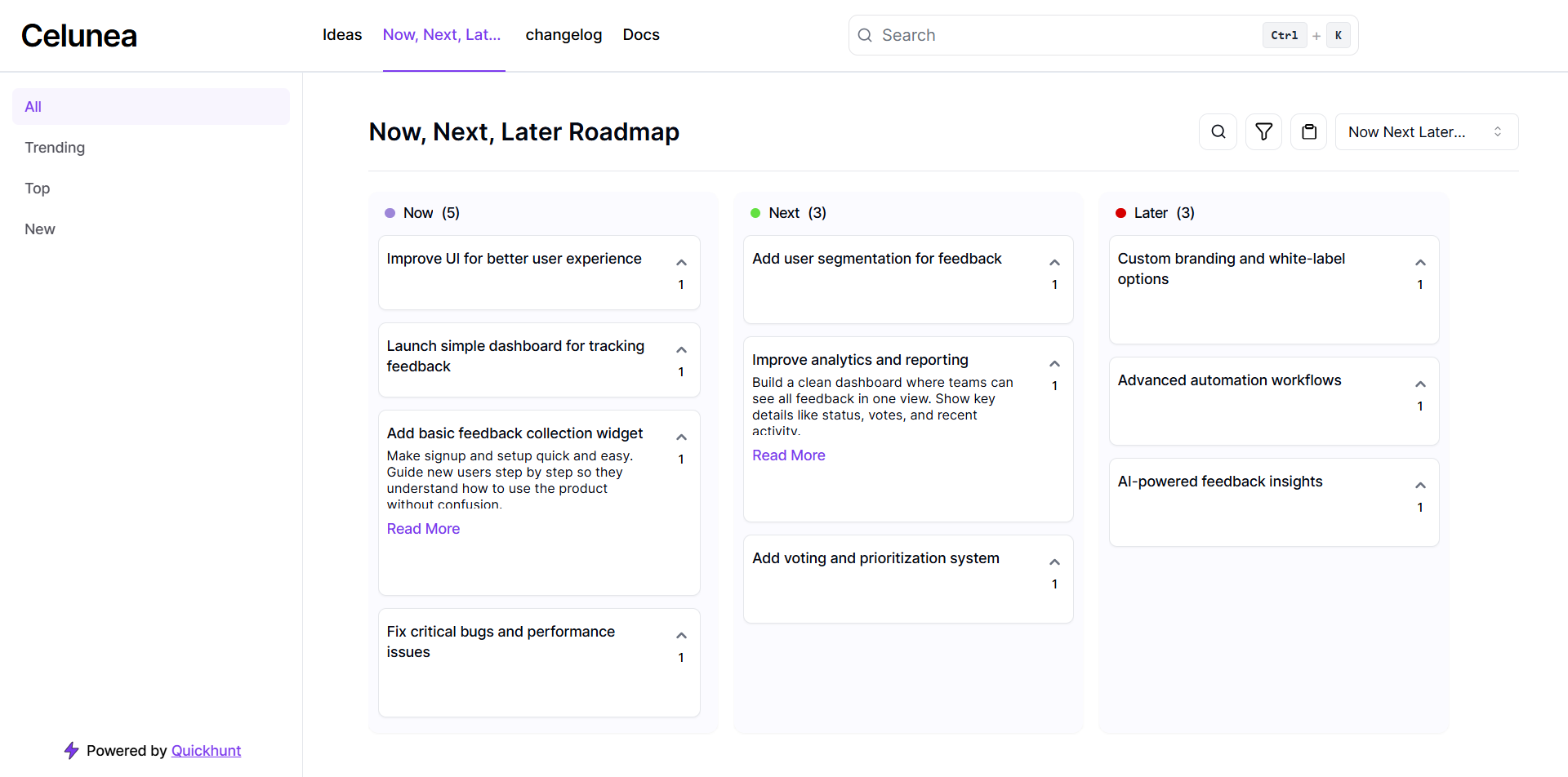
The now-next-later roadmap offers one of the simplest and most effective ways to plan product work. Teams divide all tasks into three clear stages: now, next, and later. This product roadmap example removes confusion and keeps everyone focused on current priorities.
Teams use this format to avoid rigid timelines. Instead, they focus on value and impact. For example, the “now” section includes active tasks, the “next” section shows upcoming priorities, and the “later” section holds future ideas.
In addition, this example of a product roadmap helps product managers communicate plans without overpromising deadlines. As priorities shift, teams move tasks easily between sections. Therefore, this roadmap fits fast-moving teams that need flexibility.
2. Agile Product Roadmap Example
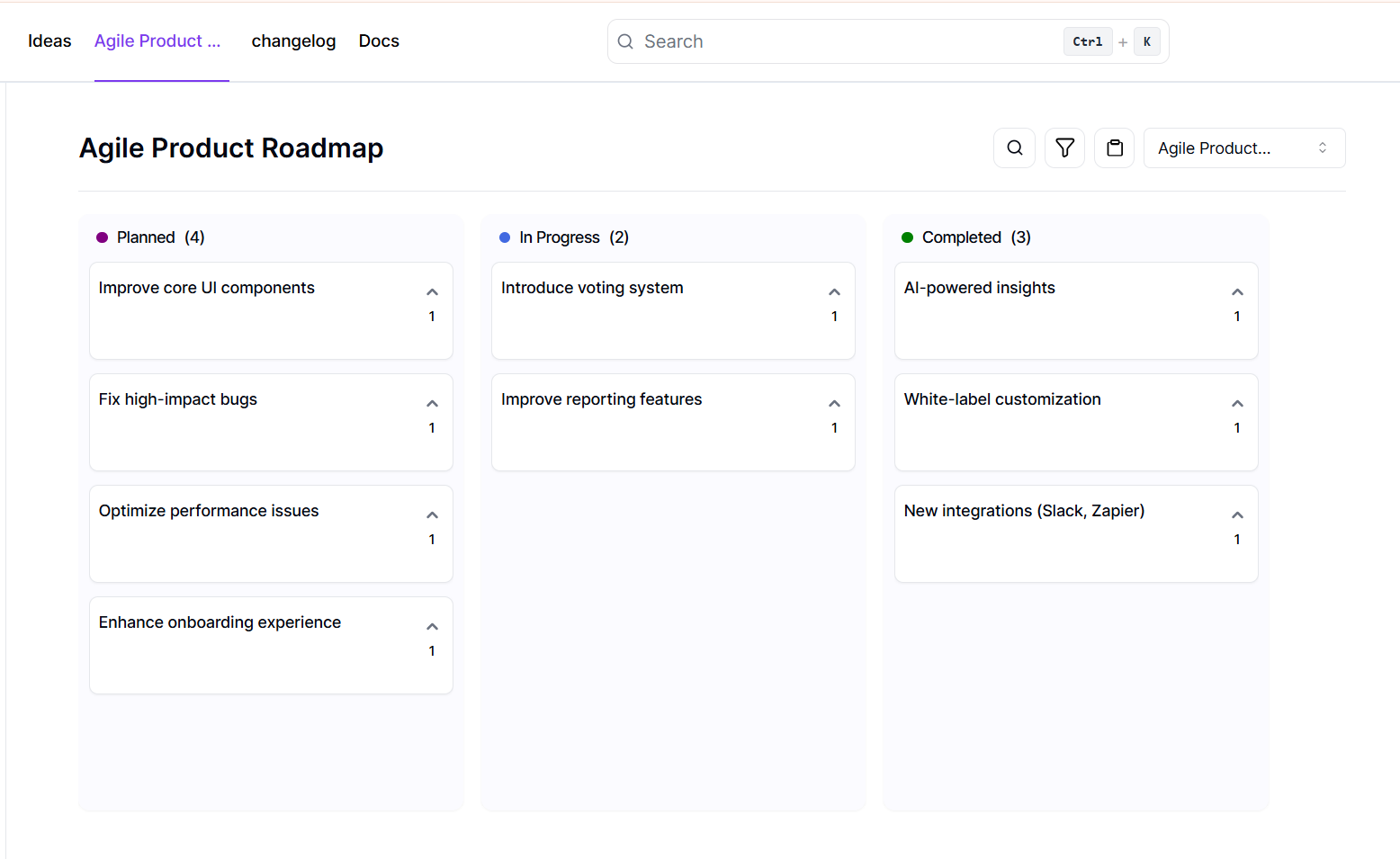
An agile product manager roadmap example supports continuous delivery and fast improvement. Teams plan work in short cycles and adjust direction based on feedback.
This product roadmap example focuses on goals instead of fixed features. For instance, teams may aim to improve user onboarding instead of listing exact tasks. As a result, teams stay aligned with user needs and business outcomes.
Moreover, agile teams review progress after each sprint. They refine plans based on real data. This approach builds a strong feedback loop. Therefore, teams deliver better results over time.
3. Feature-Based Roadmap Example
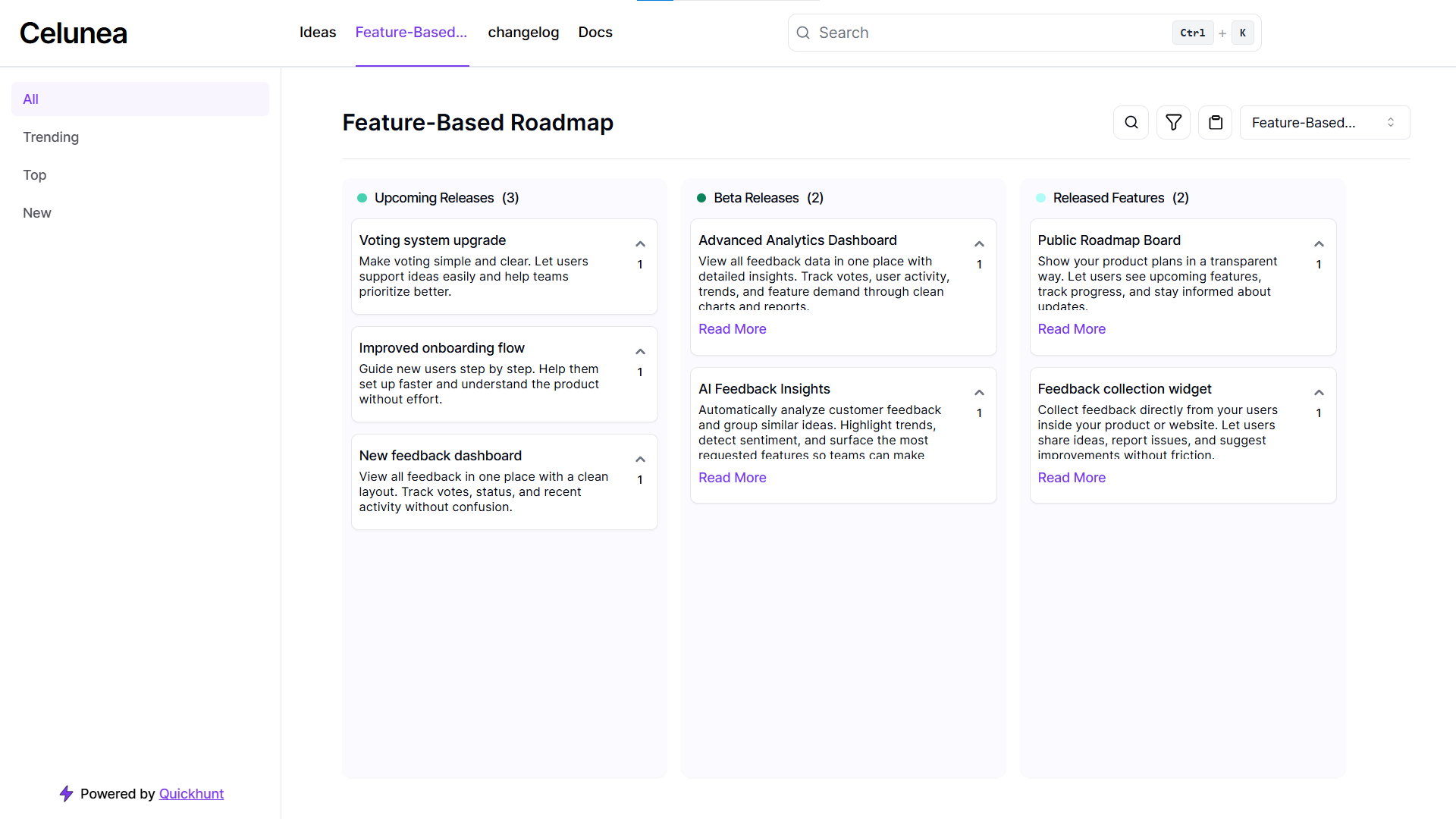
A feature-based sample product roadmap highlights product features along with priorities and timelines. Teams organize work based on feature releases, which makes this format easy to understand.
This product roadmap example helps stakeholders see exactly which features will arrive and in which order. For example, teams may plan a dashboard update, a new integration, and a reporting feature.
In addition, product managers use this roadmap to manage expectations. However, teams must connect features with business goals. Otherwise, they risk building features without a clear impact.
4. Goal-Oriented Roadmap Example
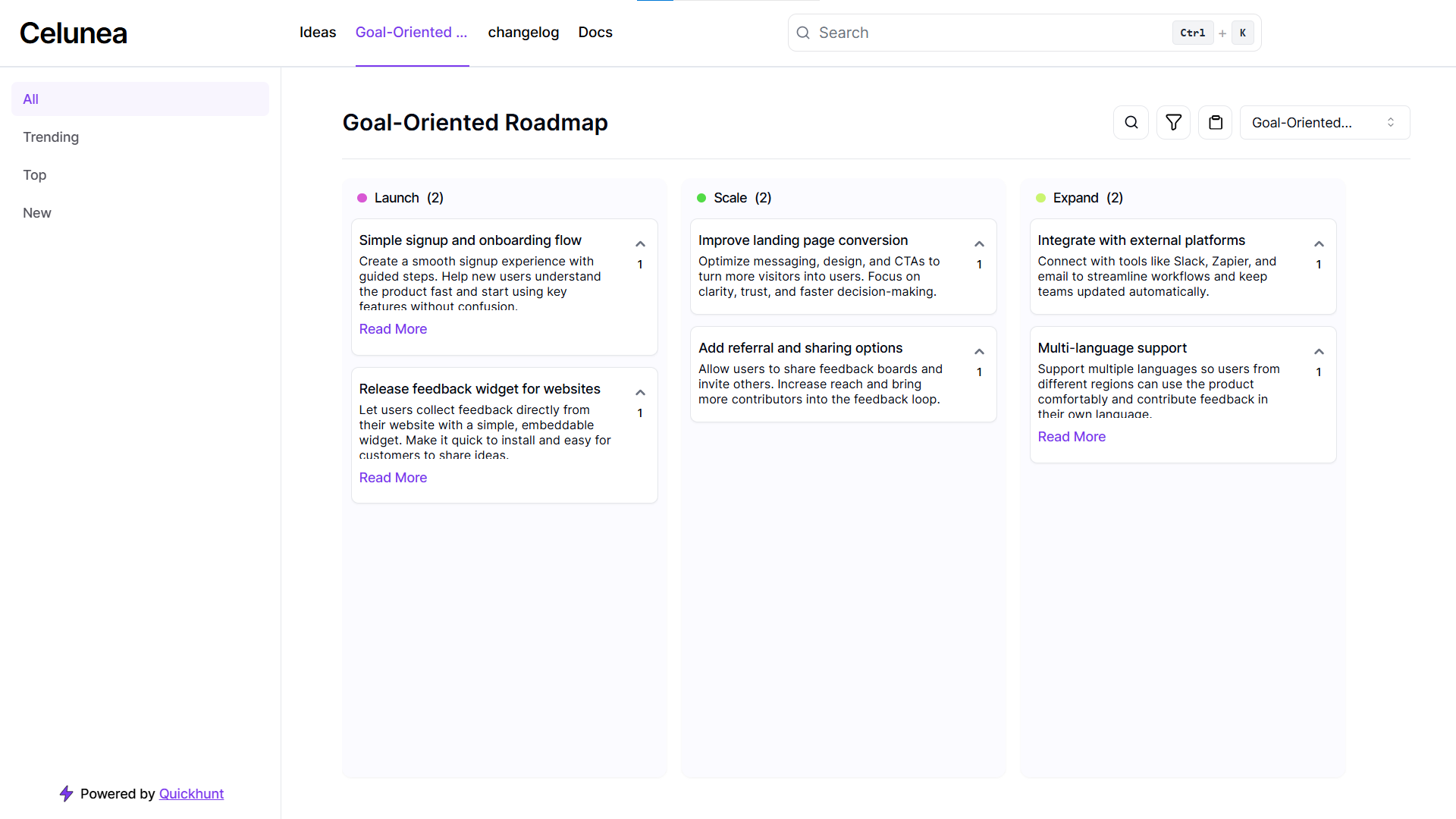
A goal-oriented strategic roadmap example focuses on outcomes instead of tasks. Teams define clear goals such as increasing retention, improving engagement, or boosting conversions.
This product roadmap example helps teams stay focused on results. Each task directly supports a larger objective. As a result, teams avoid unnecessary work and stay aligned with business strategy.
Moreover, this roadmap improves decision-making. Teams evaluate every idea based on its impact on goals. Therefore, product managers maintain strong direction and clarity.
5. Timeline-Based Product Roadmap Example
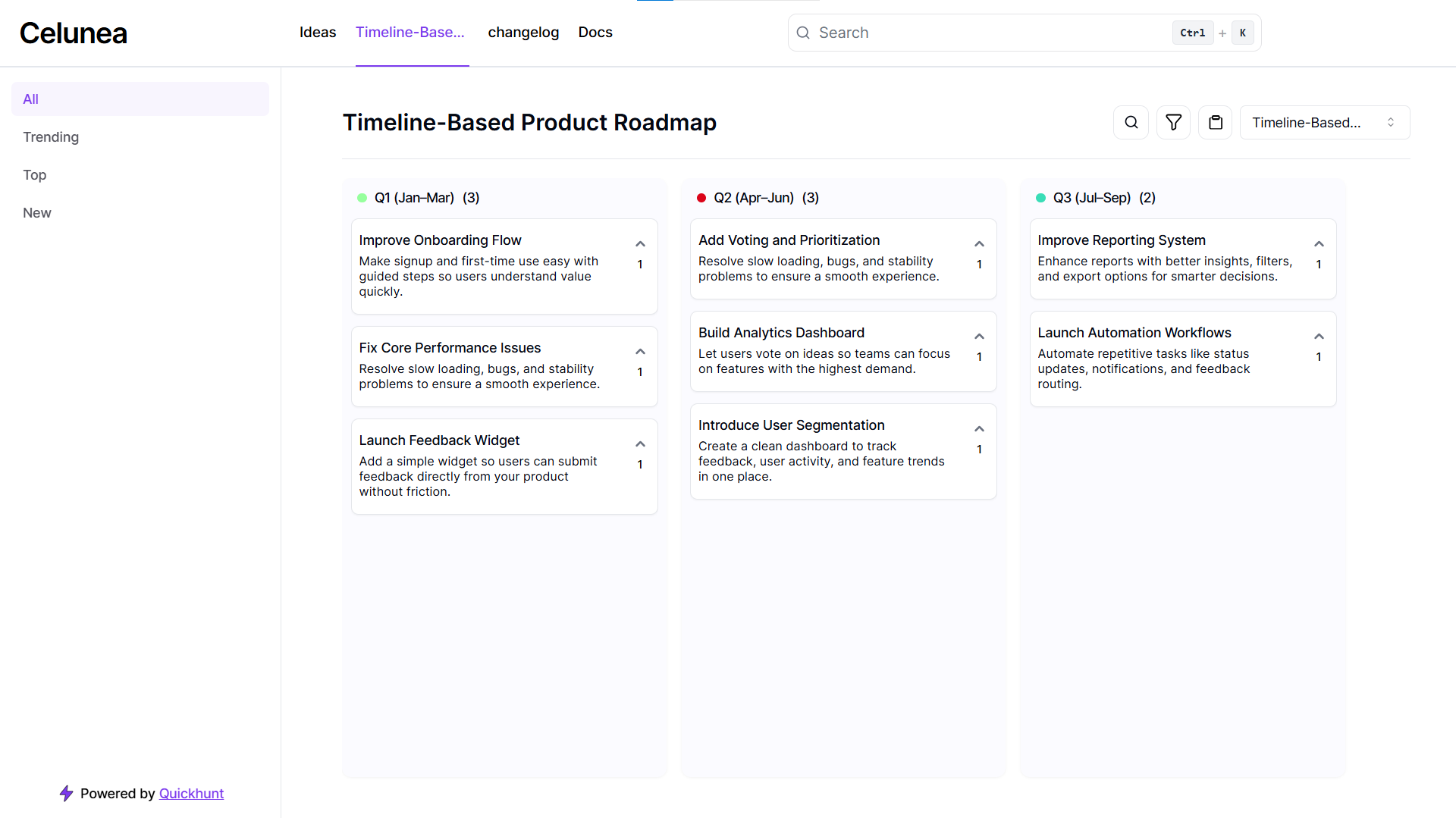
A timeline-based project roadmap example organizes work across specific time periods such as weeks, months, or quarters. This format provides structure and clear expectations.
This business roadmap example helps stakeholders understand delivery plans quickly. For instance, teams may plan a feature launch in Q1 and performance improvements in Q2.
In addition, this roadmap supports long-term planning. However, teams need to update timelines regularly. Otherwise, plans may become outdated. Therefore, product managers should review timelines often and adjust based on progress.
6. Startup Product Roadmap Example
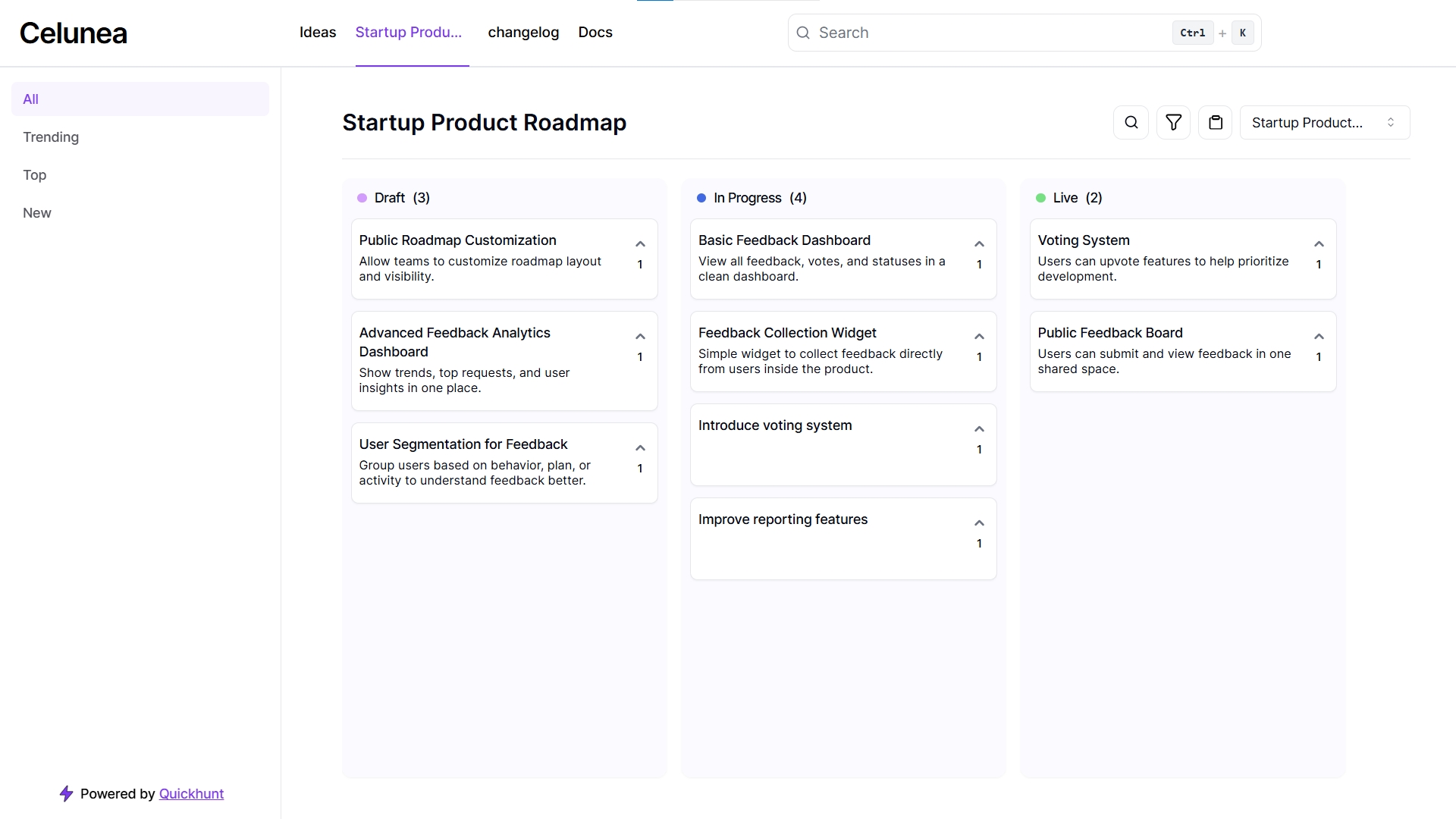
A startup product roadmap example focuses on speed, clarity, and learning. Startups need quick results, so they keep their roadmap simple and flexible.
Teams prioritize core features that deliver immediate value. In addition, they test ideas quickly and gather feedback from early users. This approach helps teams validate assumptions and improve the product faster.
Many startups combine this roadmap with a now-next-later roadmap. As a result, they maintain clarity while staying flexible. Therefore, this format supports rapid growth and innovation.
7. SaaS Product Roadmap Example
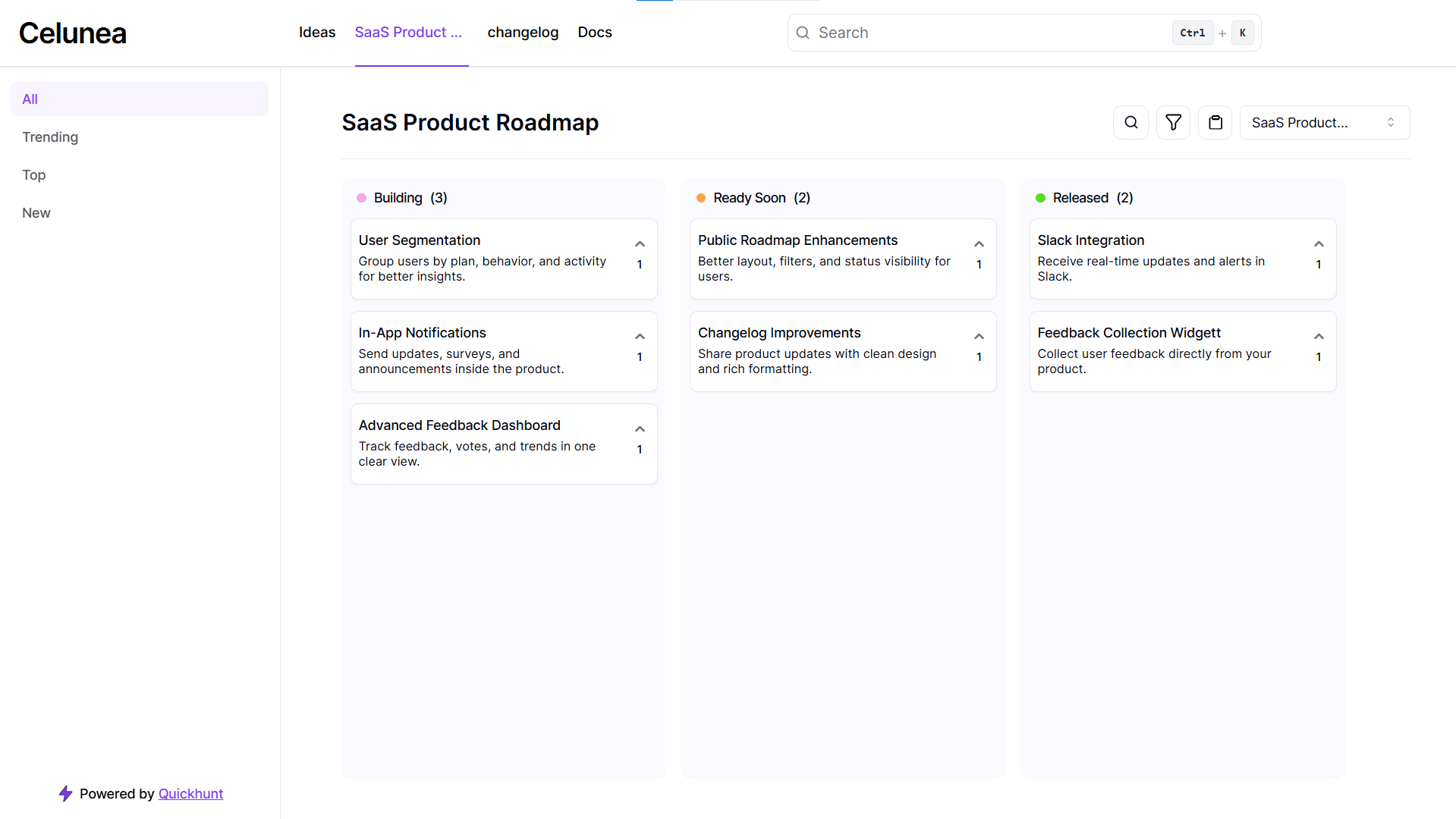
A SaaS product roadmap example focuses on continuous improvement and long-term customer value. Teams plan regular updates such as feature releases, performance improvements, and integrations.
This roadmap supports ongoing product evolution. In addition, it helps teams keep users engaged through frequent updates. For example, teams may release new features every month while improving system performance.
Moreover, SaaS teams often rely on user feedback. Therefore, they connect this roadmap with feedback tools to prioritize updates effectively.
8. Customer Feedback-Driven Roadmap Example
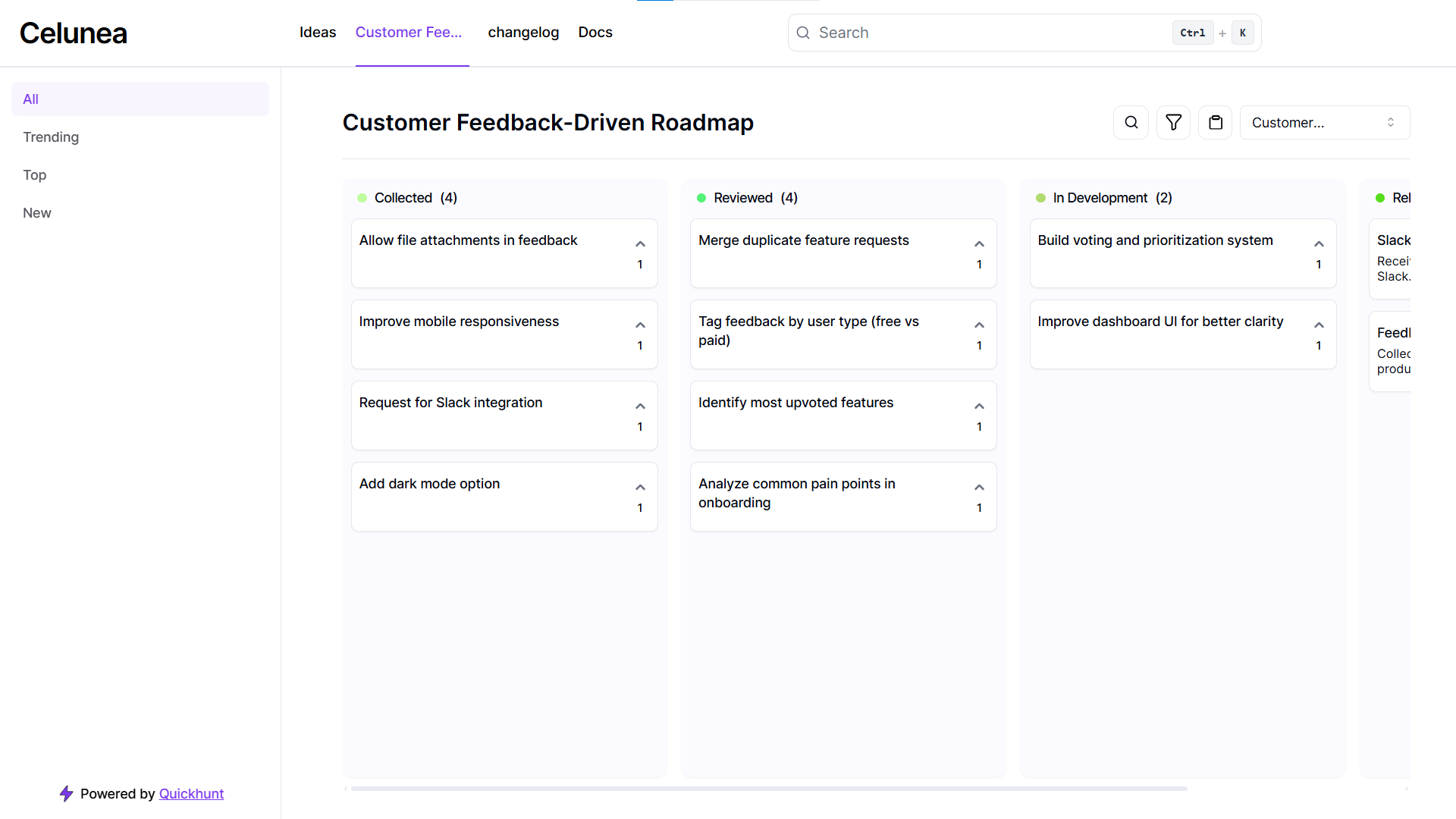
A feedback-driven product roadmap example places users at the center of product decisions. Teams collect feedback, analyze trends, and prioritize features based on real user needs.
This approach improves product-market fit. In addition, it builds trust with customers because they see their suggestions in action.
Product teams often use tools like Quickhunt to collect and manage feedback. As a result, they create better roadmaps that reflect real user problems. Therefore, this roadmap leads to higher satisfaction and better outcomes.
9. Kanban Product Roadmap Example
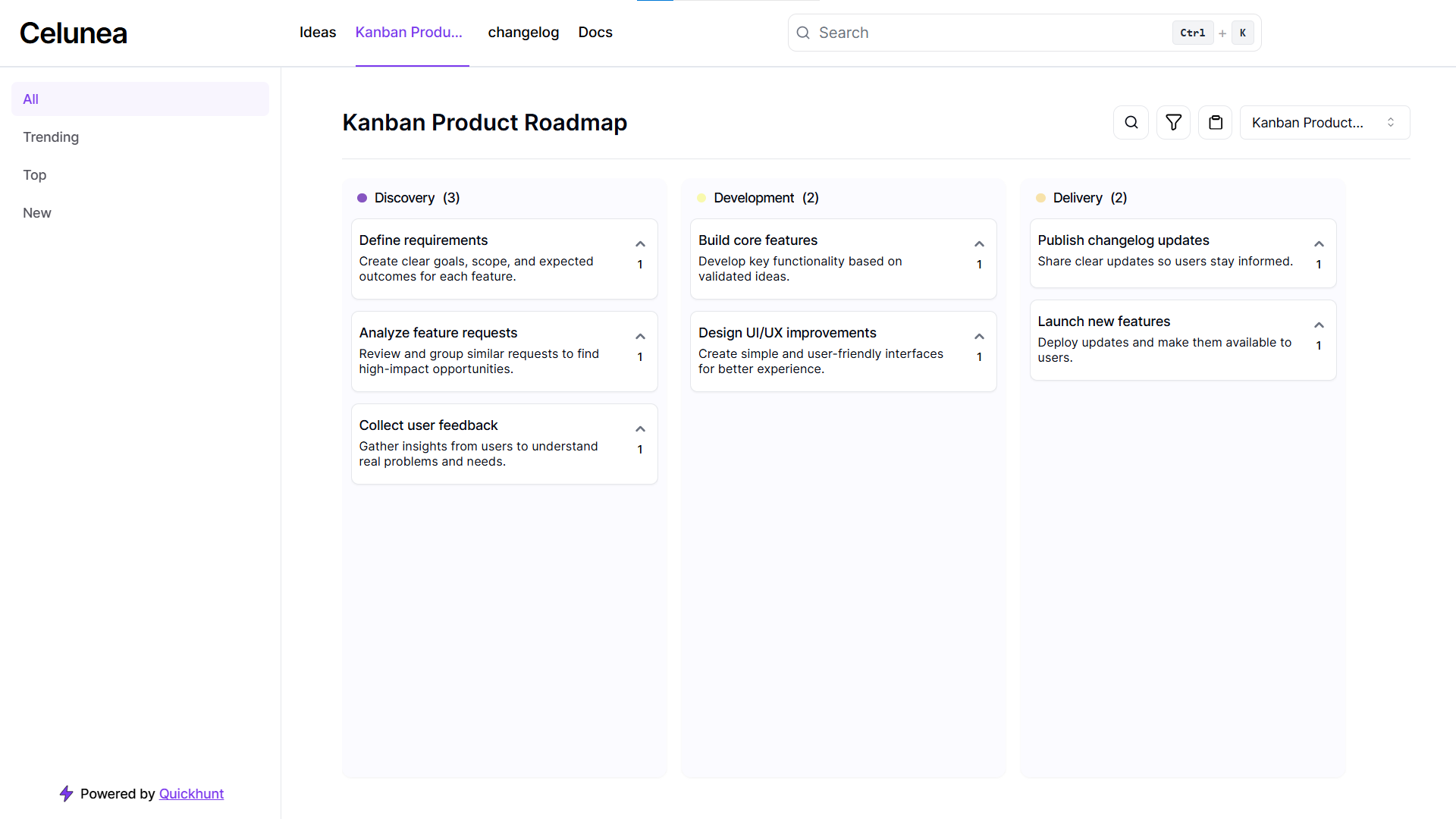
A Kanban-style project roadmap example uses a visual board with columns such as planned, in progress, and done. Teams move tasks across stages as work progresses.
This format provides clear visibility into progress. In addition, it helps teams manage work efficiently. Everyone can see the current status of each task at a glance.
Moreover, this product roadmap example supports continuous delivery. Teams focus on completing tasks instead of managing strict timelines. Therefore, this approach works well for teams that value flexibility and transparency.
10. Internal Team Roadmap Example
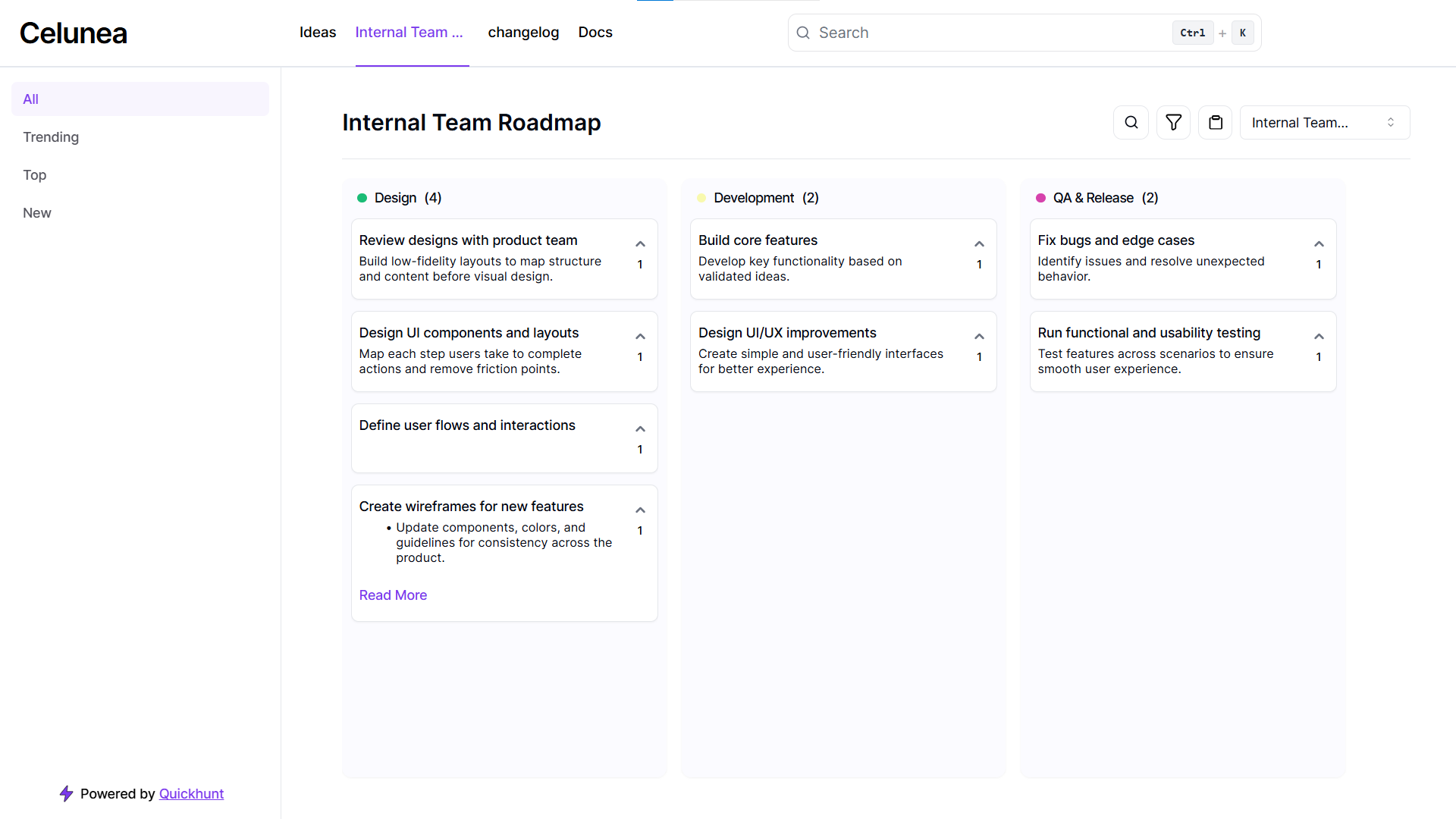
An internal product roadmap example focuses on team coordination and operational planning. It includes development tasks, design updates, and internal improvements.
This roadmap helps teams stay aligned across departments. In addition, it improves communication between product, design, and engineering teams.
Product managers use this roadmap to manage resources and track internal progress. As a result, teams work more efficiently and avoid confusion. Therefore, this format supports strong collaboration and smooth execution.
11. Technology Roadmap Example
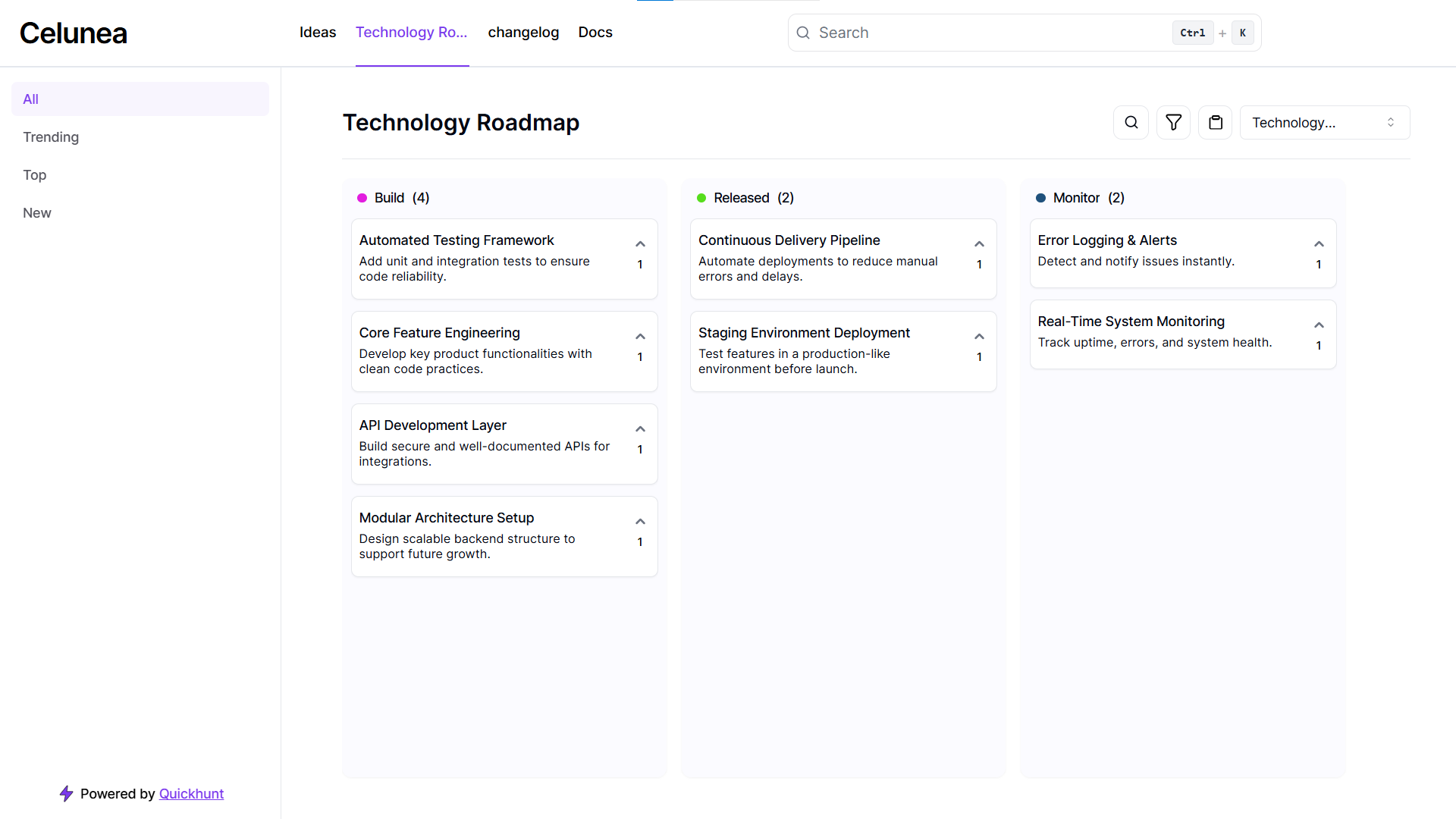
A technology roadmap example focuses on the technical foundation of a product. Teams plan system upgrades, infrastructure changes, and engineering improvements that support long-term growth.
This product roadmap example highlights areas such as scalability, performance, security, and architecture. For instance, teams may plan a cloud migration, API improvements, or database optimization.
In addition, this roadmap helps engineering teams align with product goals. Product managers and developers work together to ensure the technology supports future features.
Moreover, a strategic roadmap example like this reduces technical debt. Teams fix underlying issues before they grow into bigger problems. As a result, the product stays stable and reliable.
Tips to Improve Product Strategy
1. Set Clear Goals for Your Product
Start with clear and simple goals. Every strong product roadmap begins with a clear direction. Define goals such as growth, retention, or user engagement.
Clear goals help teams stay focused. In addition, they guide every decision in your roadmap. Therefore, your team builds features with purpose.
2. Use Customer Feedback in Planning
Customer feedback drives a strong product roadmap example. Collect feedback from users and study their needs.
Use product roadmap tools like Quickhunt to gather insights. Then, add valuable ideas to your roadmap. As a result, your product solves real problems and grows faster.
3. Focus on Outcomes Instead of Features
Shift your focus from features to results. A smart product manager roadmap example connects work with outcomes like better user experience or higher conversions.
This approach helps teams avoid unnecessary features. In addition, it keeps your roadmap aligned with business goals.
4. Keep Your Roadmap Simple and Clear
A simple sample product roadmap improves understanding. Avoid complex plans and long lists.
Use formats like the now next later roadmap to organize work clearly. This structure helps teams and stakeholders stay aligned.
5. Prioritize Work Based on Impact
Focus on tasks that bring the highest value. Every strong project roadmap example ranks ideas based on impact and effort.
This method helps teams deliver better results faster. In addition, it reduces wasted time on low-value work.
6. Align Teams with a Shared Vision
A strong business roadmap connects product, design, and engineering teams. Share a clear vision with everyone.
Regular communication keeps teams aligned. As a result, teams move in the same direction and avoid confusion.
7. Update Your Roadmap Regularly
Product strategy needs regular updates. A flexible strategic roadmap adapts to new data and changing priorities.
Review your roadmap often. Then, adjust plans based on feedback and performance. This process keeps your strategy relevant.
8. Use the Right Roadmap Type
Different goals need different roadmap styles. Choose the right example of a product roadmap based on your product stage.
For instance, startups benefit from a now-next-later roadmap, while large teams may prefer timeline or goal-based roadmaps.
9. Track Progress and Measure Results
Track performance to improve your strategy. Every best product roadmap example includes clear metrics.
Measure results such as user growth, retention, and feature usage. Then, use data to improve future plans.
10. Use the Right Tools for Roadmapping
Use modern tools to build and manage your roadmap. Tools like Quickhunt help teams collect feedback and plan effectively.
This product roadmap tool improves visibility and collaboration. As a result, teams create product roadmaps and execute plans faster.
The Last Line
A clear plan drives every successful product. A well-structured roadmap gives direction, improves focus, and keeps every team aligned. It helps teams understand priorities and move forward with confidence.
Each roadmap style offers a different way to plan and grow. Some formats support flexibility, while others provide structure for long-term goals. Teams choose the format that fits their workflow and product stage.
Customer feedback plays a major role in better planning. Teams listen to users, refine ideas, and build features that solve real problems. In addition, regular updates keep plans fresh and useful.
A simple and clear approach leads to better results. Teams communicate better, avoid confusion, and deliver value faster. Strong planning helps teams stay focused, work efficiently, and build products that users truly need.
FAQs
1. What is a product roadmap in simple terms?
A product roadmap is a simple plan. It shows goals, tasks, and progress. Teams use it to stay focused and move in the right direction.
2. Why do product teams use roadmap examples?
Teams use roadmap examples to learn better planning. These examples show how to organize work and set priorities. As a result, teams avoid confusion and save time.
3. Which tools can help create a roadmap?
Many tools help teams build roadmaps. These tools organize tasks, track progress, and collect feedback. So, teams plan better and work faster.
4. What makes a roadmap successful?
A successful roadmap stays clear, flexible, and goal-driven. Teams focus on value, listen to users, and update plans often. This approach helps teams deliver better results and grow consistently.
5. What are the best product roadmap examples for teams?
The best product roadmap examples include:
- Now next later roadmap
- Agile roadmap
- Feature-based roadmap
- Goal-oriented roadmap
- Timeline roadmap
Each type helps teams plan in a different way. Teams choose based on their workflow and goals.


.svg "footer-logo")




.svg "fecebook")
.svg "linkdin")
.svg "twitter")



.png)